

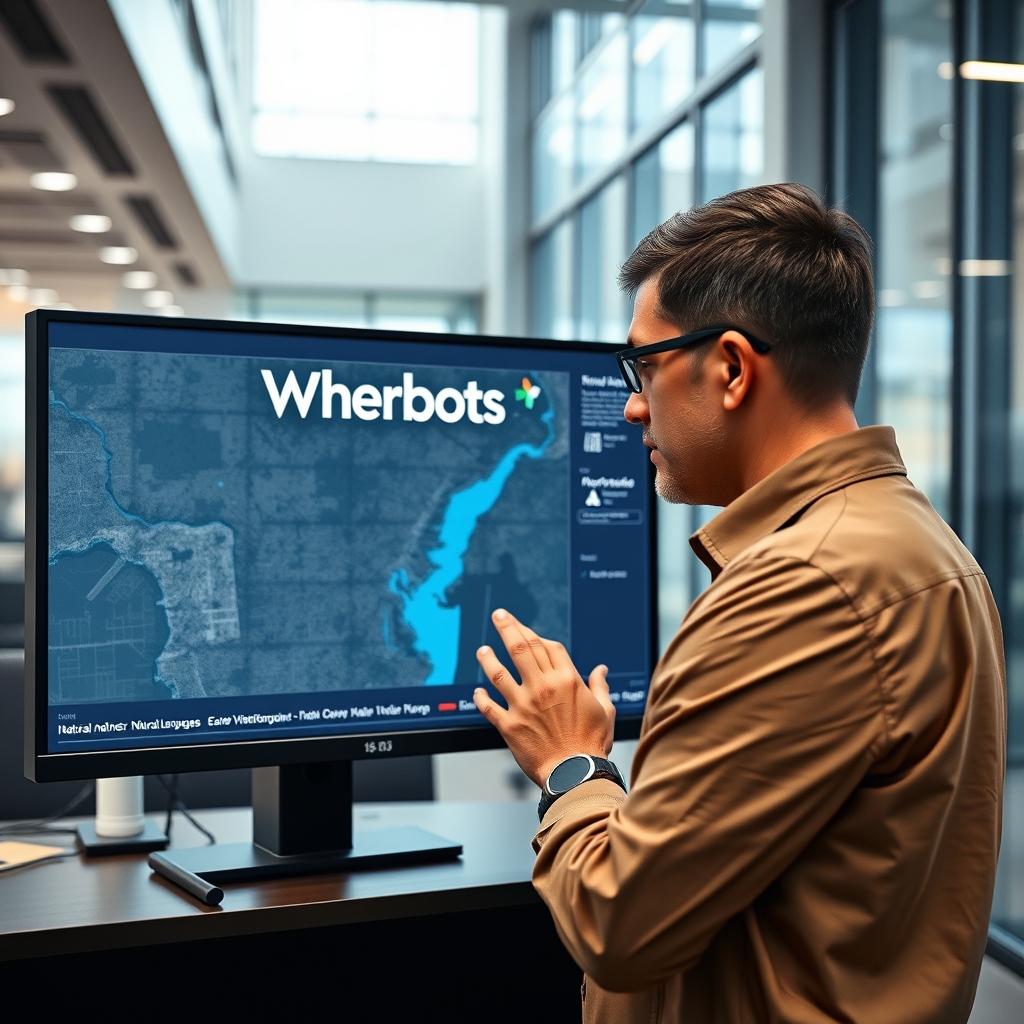
Cloud-native spatial analytics and artificial intelligence startup Wherobots Inc. has introduced an autonomous artificial intelligence agent designed to automate the construction and deployment of complex spatial data pipelines. Named Waldo, the new system allows users to interact with geographic information systems using natural-language instructions, effectively minimizing the requirement for specialized programming and geospatial expertise.
According to the company, Waldo is capable of discovering distributed data sources, generating intricate spatial queries, performing advanced analysis, visualizing geographical results, and scheduling recurring data operations. The platform is specifically tailored for enterprise applications that rely on location-based intelligence, such as satellite and aerial imagery, extensive road networks, GPS tracking records, and complex geometric features. Spatial data processing has historically presented steep technical challenges due to the integration of disparate data types, including geographic coordinates, raster imagery, and geometric shapes.
Industry data underscores the growing skills gap in this domain. A recent survey conducted by Global Marketing Insights Inc. revealed that the global geospatial workforce lags 10 to 15 years behind the technical proficiency levels demanded by modern employers. Wherobots, founded in 2022 by the original creators of the open-source Apache Sedona spatial analytics engine, asserts that Waldo can compress development cycles that traditionally require weeks of manual coding down to a matter of days.
Unlike general-purpose coding assistants powered by large language models, Waldo is engineered to interface directly with specialized computational engines built to process massive geographic datasets. Damian Wylie, head of product at Wherobots, emphasized that the underlying architecture connects existing large language models with the company’s proprietary geospatial product stack, providing the contextual awareness required to accelerate spatial workflows without deploying entirely untried foundational models.
The agent orchestrates several key components within the Wherobots platform. Its Havasu spatial data and knowledge catalog discovers and prepares public geographic datasets alongside private enterprise information. Meanwhile, RasterFlow, the company’s serverless Earth intelligence and inference engine, processes satellite and aerial imagery using computer vision models to accurately identify infrastructure elements such as buildings, roadways, and shifting land-use patterns. WherobotsDB executes the core analytical workload utilizing more than 300 built-in spatial functions, while Wherobots Maps renders the final visual output.
Enterprise deployment is streamlined through integration with existing cloud storage and data catalogs, including Amazon Web Services Inc.’s Glue and Databricks Unity Catalog. This architecture allows organizations to utilize their current data infrastructure without undertaking costly or time-consuming data migrations. In practical demonstrations, the agent has successfully located geographic datasets, constructed watershed representations, and processed high-resolution satellite imagery using machine learning architectures such as Meta Platforms Inc.’s Segment Anything Model 3.
Early commercial adopters are already realizing significant operational efficiencies. Customer Action Engine Inc. is currently leveraging the technology to construct recurring fleet analytics pipelines, reporting that new spatial analyses are delivered two to three times faster than previous manual workflows. Furthermore, Wherobots executives noted that distributed computing capabilities have successfully reduced large-scale data-joining operations from approximately one week to less than an hour.
Despite its advanced automation capabilities, Wherobots emphasized that Waldo is intended to augment human oversight rather than replace it. Users retain the ability to inspect generated queries, review visual maps, and create Jupyter notebooks to audit individual processing steps. Currently available in public preview, Waldo agent tokens are included at no additional charge within the Wherobots Professional Edition, with customers billed primarily for the underlying computational resources consumed during processing.