

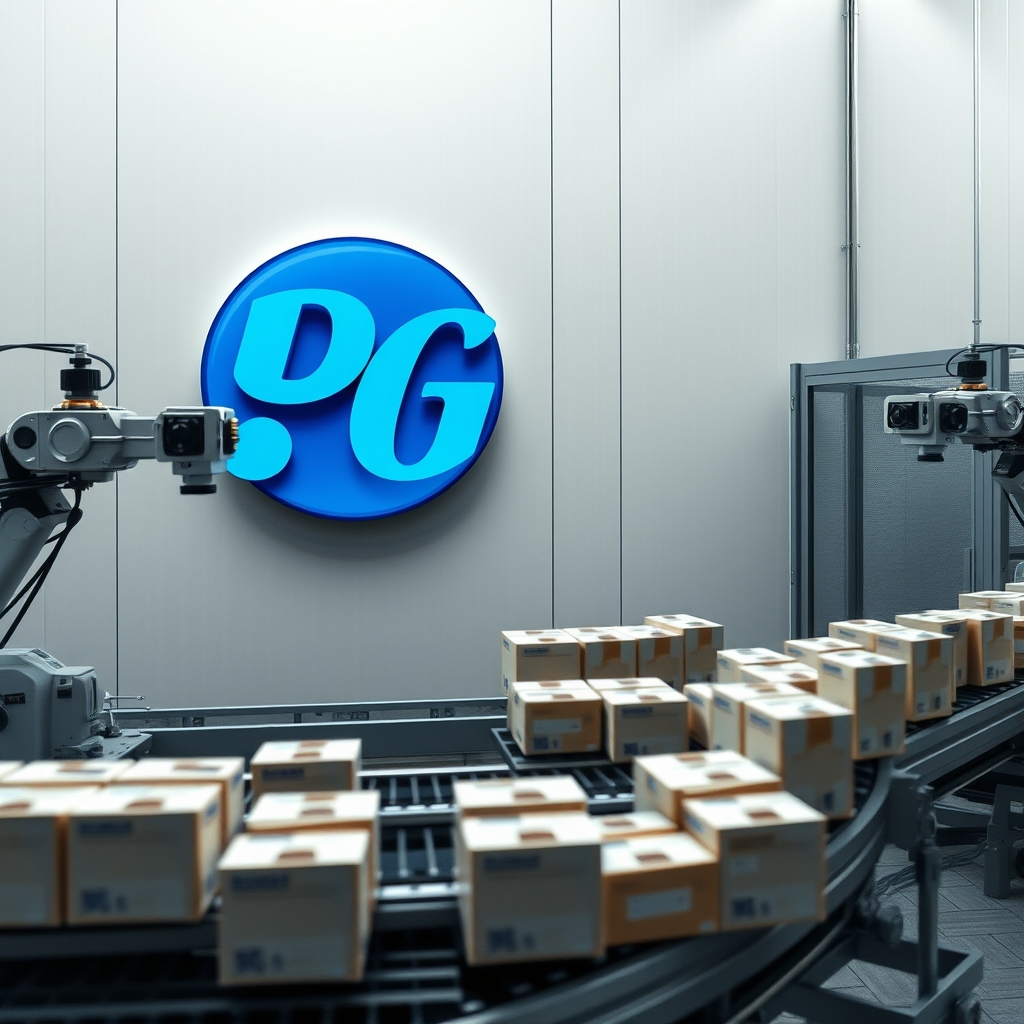
Procter & Gamble is expanding the number of factories able to run fully autonomous shifts, a move the company expects to raise manufacturing productivity and that could save it as much as $10 billion over the next several years, The New York Times reported Nov. 22. The consumer-goods maker has invested in production lines that can operate without human intervention for hours at a time, and currently has 15 sites worldwide equipped for such operations.
The company plans to add more sites next year, according to the report. Luc Reynaert, P&G’s chief product supply officer, described the effort as a significant extension of the company’s unattended operations strategy during a presentation to investors in Cincinnati on Nov. 19. Reynaert said the approach could increase manufacturing productivity by as much as 20% over the next four years. Those figures are company expectations, not reported results already achieved across its factories.
Extending automation beyond production lines
P&G’s automation work also reaches parts of its logistics network. The Times reported that the company has deployed robots at loading docks and in warehouses, and has tested autonomous trucks. Together, those activities point to an effort that spans more than the equipment making products: handling materials and moving goods are also part of the operational picture. The report did not specify how many facilities use the robots or provide details about the truck tests.
Autonomous shifts refer here to production periods when automated lines can keep operating without human intervention for hours. That is different from evidence that an entire factory has permanently eliminated its workforce. The reported capability indicates that certain operations can continue with less direct human involvement during a shift; the source does not describe staffing arrangements at the 15 sites, what tasks still require employees, or how often the lines run unattended.
For a manufacturer with a large, global production network, raising output from existing operations could have implications for capacity and costs. P&G’s forecast savings and productivity targets frame automation as a way to make its supply operations more efficient. But the reported figures are projections, and the source does not break down how the potential savings would be calculated, how much investment the expansion requires, or what share would come from factory lines versus warehouse and transport systems.
Productivity gains and workforce concerns
The prospect of factories operating for extended periods without workers has also renewed concerns about the effect of automation on jobs. United Auto Workers President Shawn Fain called robots replacing factory workers a “profound threat” in a convention speech in June, the Times reported. The concern reflects a broader tension in industrial investment: machinery may help companies increase output or reduce costs, while workers and labor groups focus on which jobs may change or disappear and how the resulting disruption would be managed.
Josh Bivens, chief economist at the Economic Policy Institute, told the Times that unattended factories were not the issue that worried him most, arguing that automation is difficult to halt once companies begin upgrading. He called instead for a stronger U.S. social safety net to help workers displaced by technological change. His remarks shift attention from whether companies will automate to how the costs of the transition might be shared. The report does not establish that P&G’s expansion has led to a particular number of job losses.
A wider business calculation
Research cited by PYMNTS Intelligence suggests that smaller businesses are also weighing technology as a way to expand what existing teams can accomplish. Its study, “New Data Shows Small Businesses Use AI to Grow Without Hiring,” found that 74% of small and medium-sized businesses use AI at least occasionally. Among those that have used it, 60% said they produce more work without adding staff, while 72% said they complete tasks faster. These survey findings concern AI use by smaller firms, rather than P&G’s factory automation, so they should not be read as a direct comparison.
The study also found that not making a planned hire was more commonly reported than laying off an employee: 13% of AI-using companies said they had skipped hiring a full-time employee, compared with 3.3% that said they had laid someone off because of AI. The figures illustrate a distinction relevant to debates about workplace technology: its effect may include changing future staffing decisions as well as replacing existing roles. P&G’s next steps will show how broadly it extends autonomous shifts, while its stated productivity and savings figures remain targets to be assessed over time.