

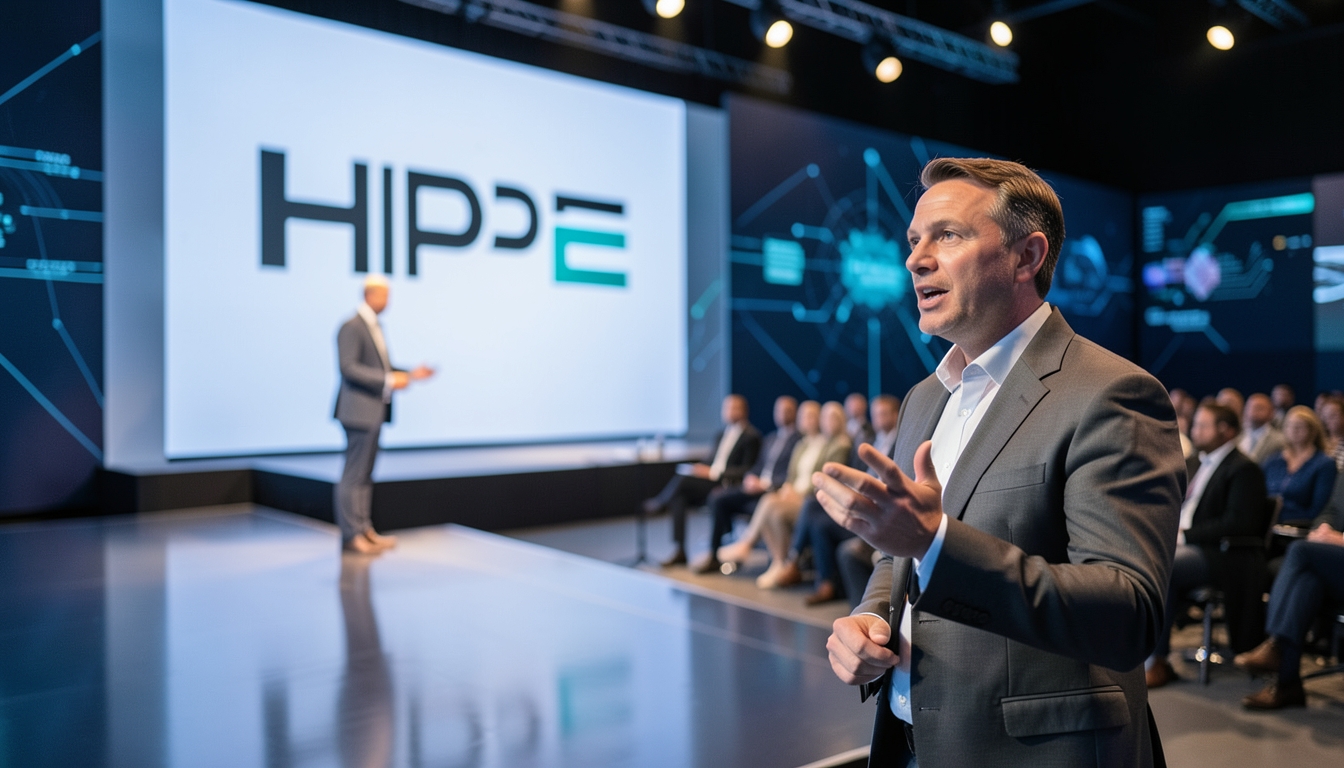
Enterprise technology leaders are finding that moving artificial intelligence beyond isolated pilots and into fully operational agentic workflows is primarily an operating-model challenge rather than a technical hurdle. During a recent corporate technology summit hosted by Bloomberg in partnership with HPE, industry executives and senior analysts emphasized that scaling autonomous multi-step workflows requires reimagining enterprise governance, data foundations, and cost management from the ground up.
Market research underscores the early stage of this transition. Data from a recent Bloomberg Intelligence survey of large enterprises indicates that multi-step agentic workflows account for a tiny fraction of token consumption, while coding and customer support dominate current usage. Primary barriers to broader adoption include high token costs, data privacy concerns, regulatory compliance, and integration friction. Experts note that there is no universal formula for deployment, requiring organizations to tailor solutions to specific industry demands and internal processes.
Accountability and Cost Control
A central theme among chief information officers is that operational accountability remains strictly in-house. While software vendors supply foundational models, the ultimate responsibility for autonomous agent behavior rests entirely with the enterprise. Leaders stress the importance of rigorous vendor vetting and pushing back against indiscriminate requests for AI implementation. Every autonomous agent must be justified by a specific business problem, and traditional return-on-investment models must adapt to consumption-based architectures.
Organizations are actively demonstrating practical applications of this philosophy. For instance, automotive and luxury retail brands are deploying agents to reduce decades of accumulated operational complexity. One major automotive enterprise uses agents within its dealer support network to streamline manual contract requests, compressing thousands of hours of administrative tasks into minutes while maintaining a human in the loop for final authorization.
Governance and Infrastructure Essentials
Rather than treating governance as a restrictive bottleneck, forward-thinking organizations are transforming it into an operational accelerator. By establishing enterprise-wide principles—such as named business owners, strict explainability, comprehensive data protection, and rigorous safety testing—teams can innovate rapidly without requiring case-by-case debates. This structured approach extends directly into data architecture, where companies are building semantic layers and ontologies specifically designed for machine consumption alongside traditional human dashboards.
Simultaneously, experts warn that the underlying network infrastructure is frequently overlooked in agentic AI planning. As autonomous agents multiply and execute transactions at machine speed, legacy networks can quickly become bottlenecks. Modernizing network architecture with built-in observability, zero-trust security, and automated remediation is vital to prevent security breaches from propagating across enterprise systems.
Strategic Roadmap for Technology Leaders
To successfully navigate the shift toward agentic operations, enterprise leaders recommend a disciplined, phased approach. Organizations should begin with well-defined business problems, realistic cost tracking per action, and robust data foundations. Furthermore, autonomous capabilities should be earned gradually, starting with repeatable, low-risk deterministic tasks before expanding authority. By right-sizing language models to match specific tasks—reserving expensive frontier models strictly for complex reasoning—enterprises can build sustainable, efficient agentic operations.