

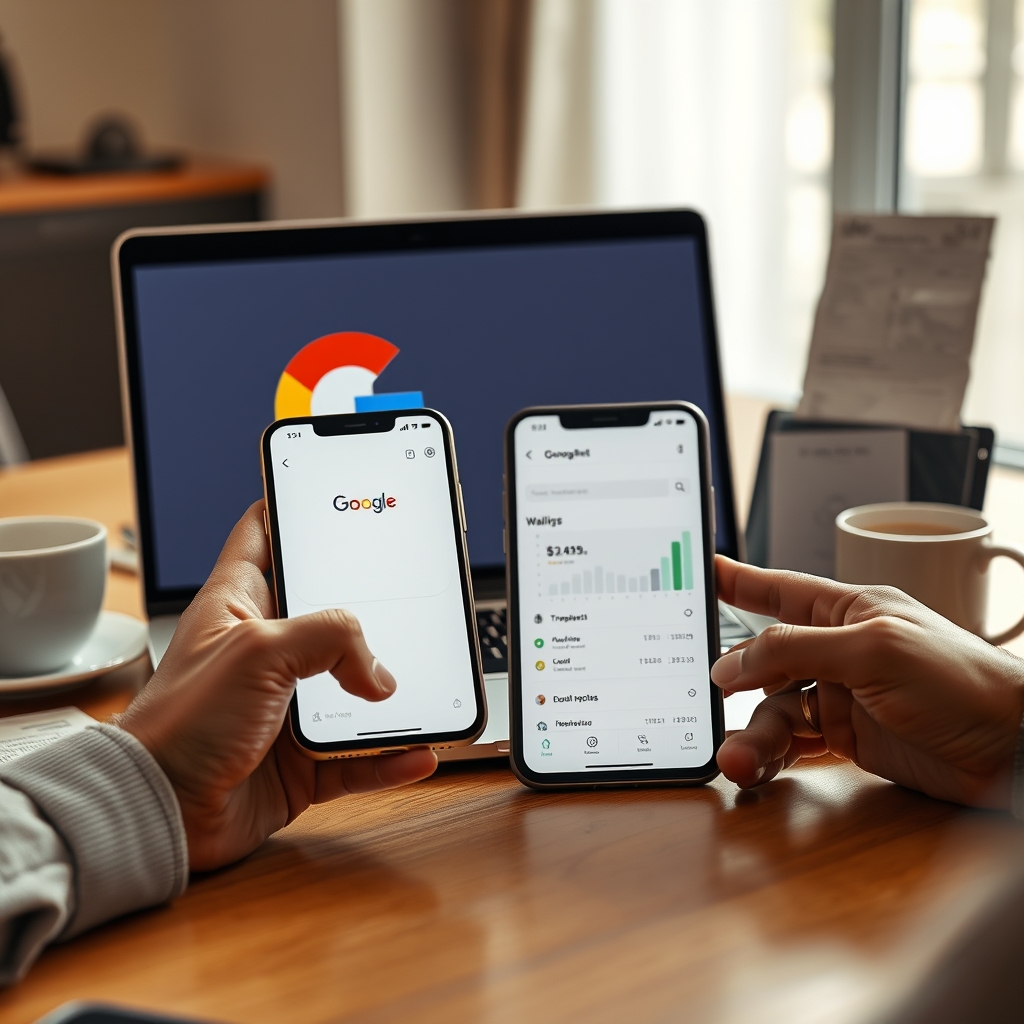
Google is extending Personal Intelligence in AI Mode in Search to use information from Wallet, giving users a way to ask for tailored guidance on spending, subscriptions and credit card benefits. The feature can analyze Wallet transaction history and receipts available through connected Google apps, but it cannot move money or make purchases.
The announcement makes Google’s AI search experience more relevant to everyday financial decisions. Instead of reviewing transactions one by one, users can ask questions in natural language, such as where their spending is concentrated or which linked card may suit a planned trip. The answers are based on information available through connected apps, so their usefulness depends on what users have chosen to connect and how much relevant data those apps contain.
Connecting Wallet and asking about spending
To enable the feature, users go to Gemini’s settings, open Personal Intelligence, and select Connected Apps. They can then choose Wallet; setup may require signing in, and the transaction information can take a few minutes to sync. Once connected, users can ask questions through AI Mode in Search. Google has also announced that Personal Intelligence is expanding to Drive, although the reported examples focus on Wallet and spending analysis.
In a test described by ZDNET, a broad question about ways to save money prompted Gemini to identify frequent quick-service meals and specialty coffees as prominent spending categories. The assistant estimated that reducing those purchases to two meals and two coffees a week could save about $30 weekly, or roughly $1,500 over a year. That figure was an estimate based on the user’s own transaction patterns, not a guaranteed outcome; actual savings would depend on whether the suggested changes were made and on the underlying spending data.
The tool also identified recurring monthly charges and organized them into a chart showing services, prices, categories, the cards charged and typical billing timing. It suggested free alternatives for some paid services. Presenting recurring costs together could help users spot charges they might otherwise overlook, while the detail about payment cards may make it easier to understand how subscriptions are distributed across accounts.
Useful advice, with limits on what the AI can do
Wallet data can also inform card recommendations. For a planned trip to New York City, the ZDNET test asked which linked cards might be appropriate for hotels and airfare. Gemini compared card benefits, including rewards and built-in travel insurance, and made a recommendation. The example illustrates a potential use for people who hold multiple cards, but the source does not establish that every card’s terms or every transaction will be represented completely. Users should check current benefit rules before making a financial decision.
There is an important boundary between analyzing financial information and controlling finances. Google’s feature does not transfer funds, spend money or manage accounts. The reported analysis draws on Wallet transaction history and receipts in Gmail; it does not access a user’s bank account directly. That distinction matters because users may otherwise assume that a personalized answer reflects a complete view of their finances. If transactions are missing from Wallet or receipts are absent from Gmail, the resulting picture may be incomplete.
For consumers, the main appeal is convenience: spending patterns, subscription charges and card benefits can be queried without manually sorting through each record. The same convenience makes the connection a personal data choice. People should consider which apps they link and whether the available history is representative before relying on the suggestions. More Wallet use may produce a fuller transaction record for the analysis, but the feature cannot infer purchases it has not been given access to.
For businesses, the development is relevant as an example of AI being applied to personal finance information, but it is not presented as an expense-management or accounting product. The reported functions are aimed at individual spending decisions, and there is no indication that the feature can process company expenses or replace dedicated financial systems. Its practical value will depend on the quality of connected data and on users treating generated estimates and recommendations as guidance to verify, rather than instructions. Google’s expansion brings more financial context into Search while keeping the final decisions—and any money movement—with the user.