

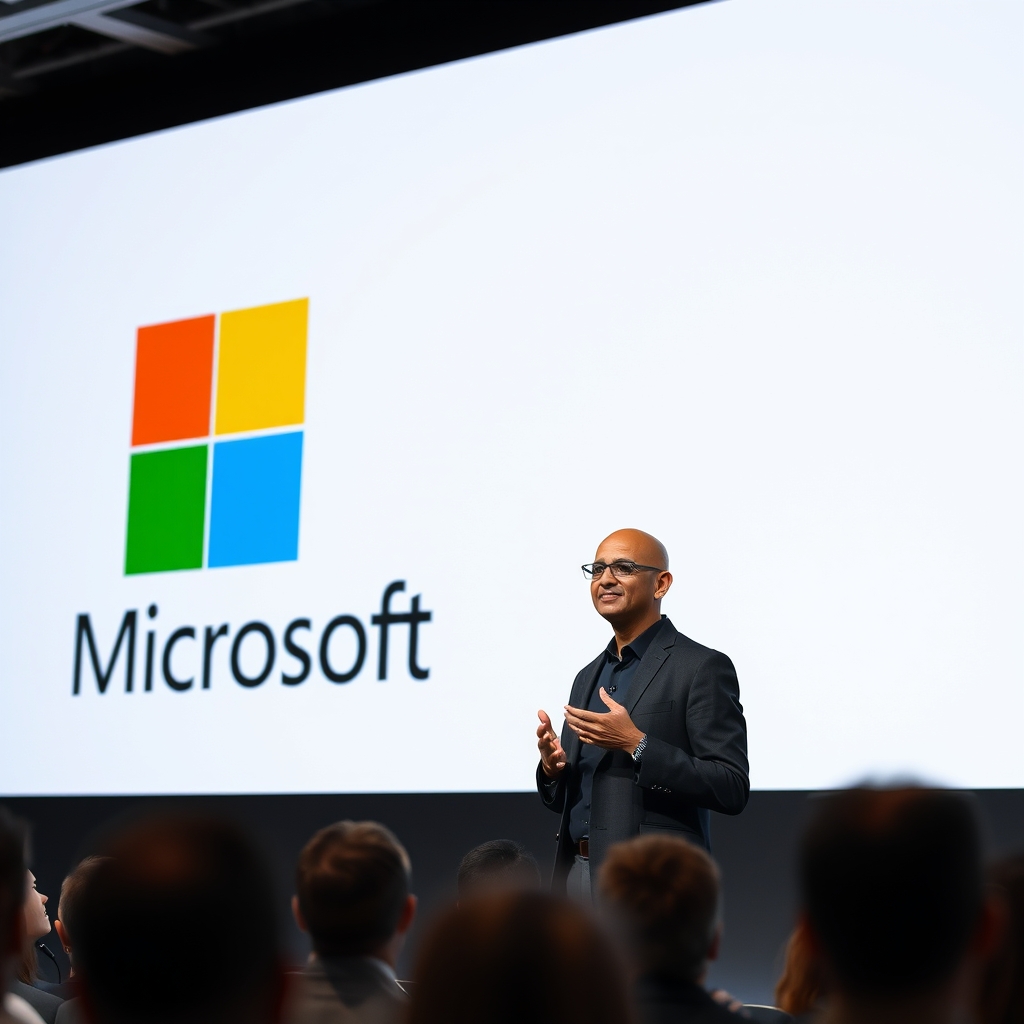
Microsoft CEO Satya Nadella says the company’s October offer of severance packages to about 60,000 employees was intended to give workers a choice as artificial intelligence changes how jobs are done. Speaking at the New York Times DealBook Summit, he argued that the shift should not be understood simply as AI replacing programmers. Instead, he said, employees’ roles are changing as software development and other work are reorganised around AI.
The offer encouraged eligible employees to leave voluntarily; the account of Nadella’s remarks does not say how many accepted. He described the package as a way for employees to decide whether they wanted to take part in Microsoft’s transition or move on. That framing makes the programme both a workforce measure and a response to the challenges of changing the skills and work practices needed inside an established technology company.
A different model for building software
To illustrate the change, Nadella pointed to a Microsoft 365 development team working on Cowork. The team has 11 people, he said, and is building what he described as a software factory: a system that produces the product rather than a group of people building each part of it directly. His example was reported by TechCrunch. It offers a glimpse of how the company’s leaders see AI changing the organisation of software work, not just adding a new tool to existing tasks.
The example does not mean that programmers have disappeared from the process. Rather, Nadella’s point was that the work itself may shift as teams use AI-enabled systems to produce software. Developers may spend less time on some hands-on construction and more on work involved in guiding, evaluating or integrating what those systems produce. Those are implications of the model he described, not a detailed account of the team’s day-to-day responsibilities or a prediction that every development group will adopt the same structure.
Nadella said the broader pattern could reach virtually every profession. That is a wide-ranging assessment, not a claim that all occupations will change at the same pace or in the same way. The Cowork example concerns software development, while extending the idea to other work raises questions about which tasks can be reorganised, what new responsibilities emerge and how employees can prepare. The source account does not provide a timetable for such changes across Microsoft or other industries.
Why the transition is difficult for an established company
Nadella also acknowledged that the shift may be especially difficult for Microsoft because the company was not built from the ground up around AI. For an established organisation, introducing a new technology can involve more than adopting tools: existing teams, roles and ways of working may also have to change. His remarks point to the organisational dimension of AI adoption, alongside the technology itself, and to the possibility that employees will experience the transition differently.
That context helps explain why the company linked the voluntary separation offer to employee choice. A separation package gives employees an option to leave rather than remain through a period of change, while allowing the company to adjust its workforce. The offer should not be mistaken for evidence that 60,000 people were laid off or that all recipients departed. The reported figure describes the approximate number of employees offered packages, not the number who took them.
Workforce choices become part of AI adoption
For employers, Nadella’s comments underline a practical HR challenge: workforce planning and technology adoption are connected. If AI changes how teams produce work, organisations must consider how roles evolve and how employees will respond. A voluntary exit programme is one possible way to manage a transition, but the account does not describe other measures Microsoft may be taking, such as training programmes or specific role changes. It also offers no details about eligibility, package terms or the company’s staffing plans after the offer.
For employees, the remarks leave a central issue unresolved: what participation in an AI-driven transition will mean in particular jobs. Nadella’s example suggests that the structure of work can change even when the occupation remains, but it does not establish how broadly Microsoft will apply the model. The significance of the offer therefore lies in both its scale and the choice it presented: as the company adapts to AI, it is asking some employees to decide whether they want to stay for that change. How roles develop—and how many employees choose to remain—will determine what the transition means in practice.