

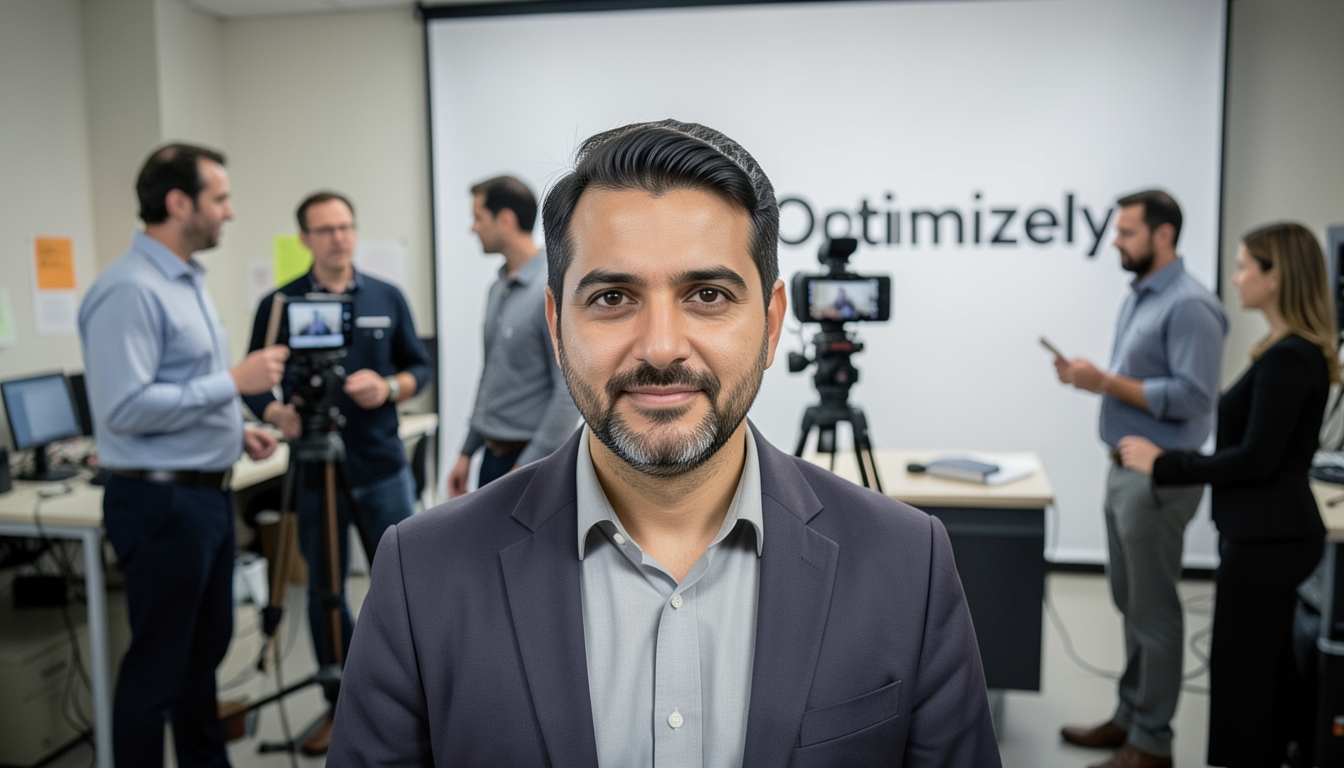
Optimizely is using a scripted murder mystery to introduce more people to its evolving business and its agentic Marketing platform. The software company has released Murder in Marketing, a 36-episode micro-drama about a marketing team investigating the fictional killing of its CEO. The comedy is designed to entertain first and sell later, as Optimizely seeks to distinguish its brand from the familiar stream of business-to-business advertising.
A different format for B2B marketing
The series grew out of a concept developed by Optimizely President Shafqat Islam and Ian Faison, founder of Caspian Studios. The idea began a couple of years ago as a marketing-themed audio drama, before the partners opted to produce a filmed series as short-form, vertical video gained attention. The episodes were shot in Los Angeles, with much of the writing and directing handled by Optimizely and Caspian teams rather than outsourced. Actors including Patrick Renna and Zainab Johnson joined the project.
Islam described the production as a low-budget experiment, saying it cost well under $1 million while aiming to look more expensive. He said the actors were initially surprised that a software company was making a scripted show, but were willing to try an unusual format. The premise uses workplace characters and absurd marketing requests as comedy material, giving viewers a story to follow without requiring them to begin with an interest in marketing software.
That choice departs from common B2B tactics such as white papers, email campaigns and paid social advertising. Islam has argued that companies can fall into a cycle of repeating familiar formats, even when their marketing begins to blend together. For Optimizely, entertainment is a way to earn attention rather than lead with a product pitch. The series also reflects a broader rebrand: the company has changed not only its visual identity but also how it positions itself.
Connecting entertainment to a new product story
Optimizely is best known for testing and content management products, but it is building a business around an agentic Marketing platform. The company therefore has a new category of product to explain and a brand-awareness challenge alongside that product development. A refreshed look may attract notice, but the series is intended to give audiences a reason to spend time with the company and, potentially, form a community around shared stories about marketing work.
Islam said the immediate goal is top-of-funnel engagement, not direct sales. The intended path is to capture attention, bring interested viewers into Optimizely’s wider ecosystem and nurture those relationships over time. That eventual process could include remarketing, but the company has not presented the show as a direct-response campaign. The distinction matters: viewership alone can indicate reach, but it does not establish that the series has changed perceptions or generated business.
In its first week, the series drew more than 1 million views on Instagram, according to Optimizely. It was also distributed in vertical format on TikTok, YouTube Shorts and LinkedIn. The company is creating short clips of about 10 seconds to encourage discovery and sharing, and has released a feature-length version on YouTube as well. The separate formats give the production several routes to audiences, although performance across platforms will need to be assessed beyond initial viewing numbers.
Measuring whether the experiment works
Optimizely says it will look for changes in measures such as unbranded search traffic and unaided brand recall, using research and surveys that are already conducted periodically. Islam said the company expects it may take about three months to see a material effect. If its tracking shows no noticeable change, he said, the production may remain a fun experiment; a measurable impact would strengthen the case for another installment. He has expressed interest in a possible second season with a workplace-comedy approach, but that remains an idea rather than a confirmed production plan.
The first season has already offered a creative lesson. Islam said making the feature-length version and the short episodes at the same time contributed to a slower opening than the team wanted. A micro-drama needs to deliver a compelling moment within the first few seconds, while a longer film can afford more setup. That difference illustrates the practical challenge of adapting a single story for platforms where viewers make quick decisions about whether to keep watching.
For other businesses, Optimizely’s campaign is a case study in using entertainment to support brand positioning, not proof that an unconventional format will outperform established marketing channels. The show’s early reach offers a reason to continue measuring its effects, but the more consequential test will be whether awareness and recall move after the novelty fades. The company has put a sizable creative effort behind a top-of-funnel objective; whether that investment changes how audiences recognize Optimizely’s newer platform will take time to establish.