

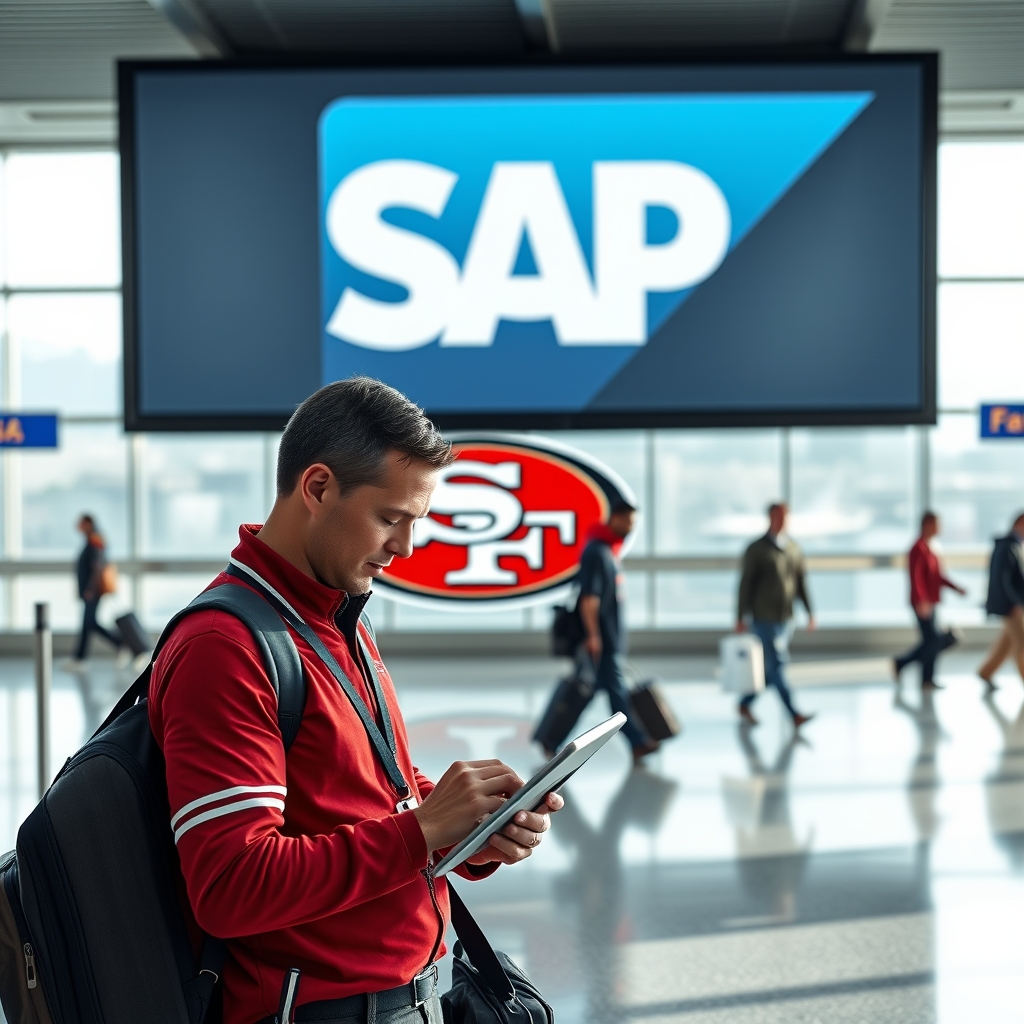
The San Francisco 49ers are taking their operations beyond the United States during the 2026 NFL International Series, with SAP software helping the team manage travel between Melbourne and Mexico. The announcement points to SAP Concur and artificial intelligence as part of the technology supporting the club’s international movements, though it does not specify which AI functions are being used or provide performance figures.
Technology behind international travel
For a professional football team, international travel involves more than getting players from one city to another. A traveling organization must coordinate people, schedules and business processes across locations, while managing the practical demands that accompany work away from home. The 49ers’ travel across continents makes that operational context especially visible. SAP says its software is helping keep the team moving during the international series, placing business travel technology in a high-profile sporting setting.
SAP Concur is SAP’s travel and expense management offering. Tools in this category are generally used to bring travel-related processes and expense administration into a more organised digital workflow. The source announcement does not describe the 49ers’ specific setup, the tasks assigned to the software, or how staff interact with it. It also does not explain where AI is applied. Those details matter: without them, it is not possible to assess the system’s precise role in the team’s itinerary or daily operations.
The reference to AI nevertheless reflects a broader business interest in applying artificial intelligence to routine administrative work. In travel operations, that interest can include looking for ways to reduce friction in planning and managing information, but the announcement does not confirm any particular capability or automated decision. For the 49ers, the confirmed point is narrower: SAP software, including SAP Concur and AI, is helping support the team’s travel during the 2026 international series.
A demanding setting for coordination
International travel puts familiar coordination challenges into sharper focus. A team moving between countries has to operate across distance and changing local conditions, while the organisation still needs to keep its supporting work in order. Travel and expense systems are relevant because they address administrative processes associated with business trips. They do not replace the people making operational decisions; rather, they can provide a digital framework for handling parts of the work around travel.
The 49ers are a prominent example, but the underlying issue is relevant to companies whose employees regularly work across borders. As organisations expand their geographic reach, travel administration can become more complex, particularly when information and processes are spread across teams. Software that supports travel-related workflows may help businesses manage that complexity. Whether a particular system produces measurable time savings or other benefits depends on how it is configured and used—information the announcement does not provide.
What the announcement does—and does not—show
The connection also illustrates how enterprise software can be used outside conventional office settings. A sports franchise has needs that differ from those of many businesses, but it still has to coordinate its people and supporting operations. The international series offers a concrete example of SAP technology being associated with those demands. It does not, on the available information, establish that the software changes athletic performance or provides a competitive advantage on the field.
Nor does the announcement identify specific AI tools, explain whether the technology recommends actions or automates tasks, or compare the system with alternatives. It gives no costs, adoption figures or measured outcomes. That limits what can be concluded about the implementation, but it also highlights the importance of specifics when businesses evaluate AI claims: the relevant questions include what work the technology handles, how it fits into existing processes and how its results are assessed.
A business use case in motion
For now, the story is a focused account of technology supporting a team’s international travel rather than a detailed product case study. The 2026 NFL International Series gives the example a global setting, while the route named in the announcement—from Melbourne to Mexico—underscores the geographic reach involved. More information about the software’s exact functions and outcomes would be needed to judge the implementation in depth. The broader takeaway is more measured: travel technology and AI are being brought into the operational work of keeping a major organisation moving across borders.