

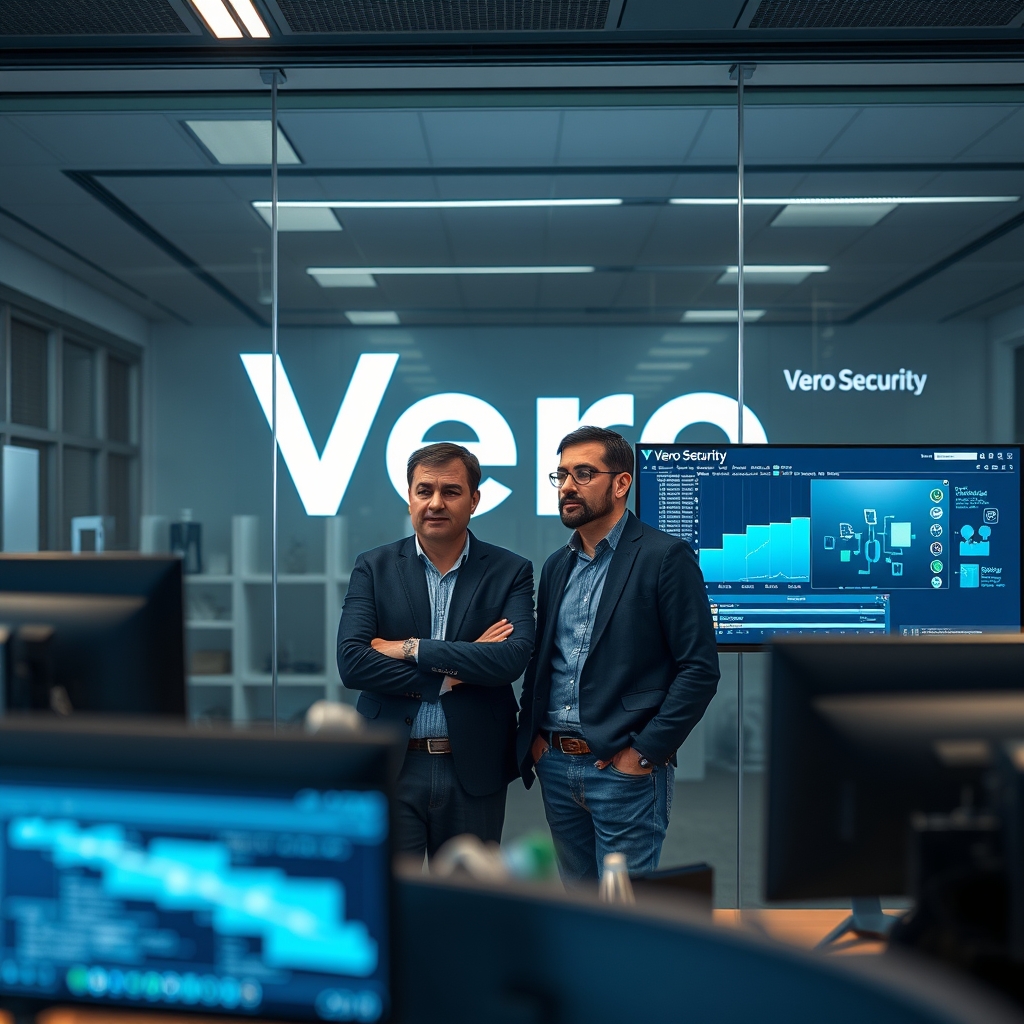
Vero Security has raised $11 million in a seed round led by TLV Partners to develop its platform for securing the artificial intelligence tools and agents used inside companies. The startup plans to put the funding toward advancing its technology and expanding its go-to-market presence in the United States.
Founded in 2025 by Elad Tessler, chief executive, and Daniel Meirov, chief technology officer, Vero is positioning its product around a developing discipline it calls AI Security Engineering, or ASE. The company says its platform is designed to turn security policies into controls that operate as AI tools and agents are used and changed.
A security discipline built for changing AI tools
ASE focuses on an evolving part of enterprise technology: AI applications and agents that employees adopt, configure or modify for business use. These systems can change quickly, and the actions an agent takes may happen faster than a conventional review process can respond. Vero argues that securing them calls for a distinct operational approach, rather than relying only on practices developed for other areas of cybersecurity.
Under Vero’s model, security teams define the policies an organization wants to apply. The platform translates those requirements into enforced controls and updates them as AI tools evolve. When a situation calls for a judgment about risk rather than an established policy, the system refers the decision to a security professional. The goal is to leave people responsible for setting acceptable boundaries while reducing the manual work needed to keep controls aligned with changing tools.
The platform’s core component is the AI Runtime Governor. Vero says it applies approved policies while AI systems are operating and blocks agent actions that would trigger unauthorized behavior. When a change presents a risk that requires a new decision, the platform is intended to provide analysis and a recommended response for the responsible security professional. The company has not detailed specific customer deployments or performance results in the funding announcement.
Automation paired with human judgment
Tessler has described the operational challenge as a combination of volume and speed. In his account, security teams may need to account for dozens of AI-tool changes in a week, mapping each change to the controls it affects, while agents can act in seconds. That creates pressure to put protections in place before an action occurs, rather than rely exclusively on after-the-fact review. Vero’s product is intended to automate much of this recurring control work, not to remove security professionals from decisions about business risk.
The company’s proposed division of responsibility leaves humans to determine what risks the business will accept, which exceptions are appropriate and whether a particular tool is worth using. That distinction is important for organizations where security policies must accommodate different workflows and risk tolerances. Vero’s approach aims to reduce the number of routine enforcement decisions that require individual attention, while escalating cases where policy alone is insufficient.
Building the profession alongside the product
Alongside its commercial platform, Vero is establishing AISecurityEngineering.org as an open community and knowledge center. The planned resources include practical field guides, workshops and an ASE credential track. The initiative reflects the company’s view that the work is growing faster than shared methods and training materials are being established.
Tessler told SecurityWeek that Vero’s own count of open roles titled AI Security Engineer rose from 367 on October 25 to 451 on November 14, a 23% increase over three weeks. The figures are the company’s tally, rather than an independently described labor-market survey. Tessler compared the emerging field with application security and detection engineering, arguing that those disciplines developed shared knowledge as they matured and that AI security needs a similar foundation.
The funding and community effort address two related needs: operational tools for keeping protections current, and a body of practice for the people responsible for AI security. For businesses, the challenge is not simply whether an AI service is approved, but how to maintain safeguards as tools and agent behavior change. Vero is betting that policy-driven automation can help security teams manage that work while preserving human oversight for consequential judgments. How well the model performs will depend on how effectively the platform keeps controls aligned with evolving systems and fits into each organization’s existing security processes.