

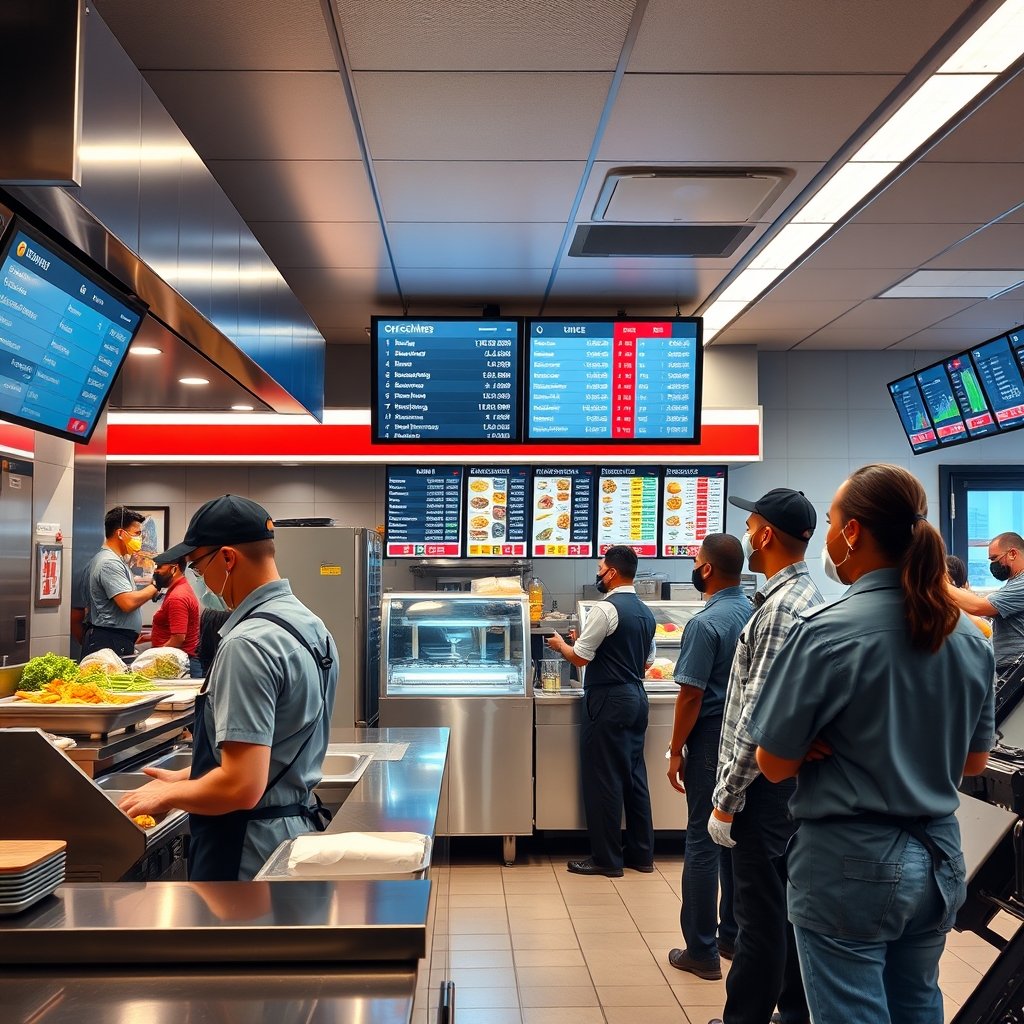
Fast food operations face severe labor retention challenges, but technological interventions may offer a path forward. Yum Brands leadership reports that deploying conversational artificial intelligence at drive-thru lanes helps keep crew members on the job longer. According to corporate figures, managing the headset during peak dinner rushes represents one of the most demanding tasks for restaurant staff, often leading to high rates of departure.
Alleviating Drive-Thru Stress Points
Data from the Bureau of Labor Statistics indicates that workers in the accommodation and food services sector quit at a monthly rate of 3.5% in August, representing the highest turnover of any United States industry and nearly double the economy-wide nonfarm average. At Taco Bell restaurants, the headset operator must handle incoming requests, manage road noise, and resolve order discrepancies under intense time pressure.
To mitigate these pressures, the chain partnered with conversational technology provider Omilia to automate order intake. Yum Brands Chief Legal Officer Erika Burkhardt noted during a recent industry summit that automated ordering removes key friction points from the customer interaction. By taking over routine order capture, modification handling, and add-on suggestions, the software allows staff to redirect their energy toward food preparation and customer service.
Scaling Deployment and Industry Context
The conversational platform currently operates across more than 890 Taco Bell drive-thrus spanning 38 states. While the parent company and its technology vendor have not published exact turnover percentages, early internal assessments point to improved retention rates at automated locations compared to traditional sites, with sales figures remaining steady or improving. At peak-performing restaurants, the software successfully manages over 90% of customer orders without requiring direct staff intervention.
The broader quick-service restaurant sector continues to invest heavily in automated infrastructure despite initial implementation hurdles. Industry analyses indicate that replacing a departed restaurant worker incurs significant onboarding expenses. Major competitors are pursuing similar automation strategies to reclaim lost labor hours and stabilize restaurant crews. Key developments across the sector include:
- Expansion of voice ordering technology to nearly 900 franchise locations.
- Implementation of artificial intelligence to handle routine customer requests and upsells.
- Ongoing industry evaluations of conversational agents to reduce weekly labor hours per store.
Taco Bell Global Chief Digital and Technology Officer Dane Mathews affirmed that scaling the platform supports the organization’s broader digital roadmap. As competing restaurant chains develop proprietary voice systems for future rollouts, automated drive-thrus are shifting from experimental concepts to central pillars of restaurant operations and workforce management.